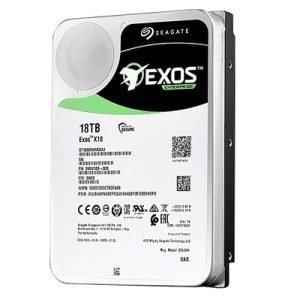
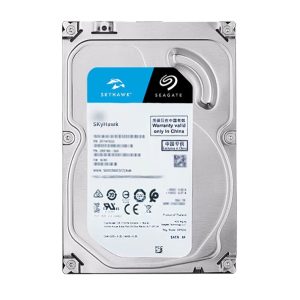
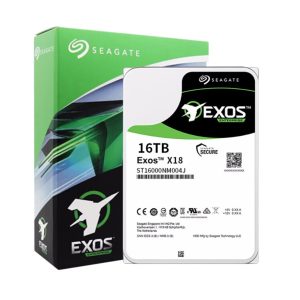
As global demand for storage solutions surges in early 2026, Seagate’s enterprise-grade HDDs and SSDs have become a focal point for bulk buyers navigating volatile pricing. Understanding the critical differences between Seagate’s product lines—from performance benchmarks to use-case optimization—is essential for making cost-effective procurement decisions. This guide breaks down the latest models, backed by Q4 2025 market data, to help you identify the ideal drive for your projects.
Decoding Seagate’s Hard Drive Portfolio: Performance and Application Breakdown
Seagate’s 2026 lineup caters to divergent needs. For hyperscale data centers, the Exos X24 (24TB HDD) dominates with 550MB/s sustained transfer rates and 2.5M hours MTBF, while the IronWolf Pro series (22TB) prioritizes NAS environments with AgileArray technology for 24/7 operation. SSD options reveal sharper contrasts: The FireCuda 540 (PCIe 5.0 NVMe) delivers 12,400MB/s sequential reads for AI workloads, whereas the budget-friendly BarraCuda Q5 (PCIe 3.0) caps at 3,500MB/s but costs 60% less per TB. Price fluctuations in Q1 2026 show enterprise HDDs averaging $22.50/TB (up 18% YoY), with SSDs at $0.28/GB for high-end models.
How Do Seagate’s Reliability Metrics Impact Total Cost of Ownership?
Beyond raw specs, Seagate’s Annualized Failure Rate (AFR) data reveals operational nuances. The Exos X24 maintains a 0.35% AFR under 550TB/year workloads—40% lower than consumer-grade drives. Warranty terms further differentiate models: Enterprise SSDs like the Nytro 5000 offer 5-year coverage with 3DWPD endurance, while BarraCuda HDDs provide 2-year limited warranties. For procurement teams, this translates to potential savings of $9,000 per petabyte over 5 years when opting for Exos over desktop-class drives in data center deployments.
Future-Proofing Your Storage: Seagate’s Roadmap and Compatibility Considerations
Seagate’s HAMR (Heat-Assisted Magnetic Recording) technology, slated for 30TB+ drives in late 2026, necessitates forward-looking compatibility checks. Current Exos models feature dual-actuator designs for seamless transition, while legacy systems may require firmware updates. For hyperscalers, the Chassis Management System (CMS) in Exos E 4U100 enclosures enables granular monitoring of 84 drives simultaneously—a critical feature as drive densities increase. PCIe 5.0-ready SSDs now consume 25% less power per TB than previous gens, addressing rising energy costs in Europe (where data center power rates hit €0.32/kWh in 2025).
When sourcing Seagate drives globally, HUAYI INTERNATIONAL LIMITED delivers unmatched advantages as an authorized enterprise distributor. Our direct supply chain access ensures stable inventory of Exos and Nytro series during market shortages, with bulk order discounts of 8-12% for 100+ unit purchases. All shipments include full 3-year Seagate warranties, and our Hong Kong/Singapore warehouses support same-day shipping to 38 countries. For procurement teams facing Q1 2026 price volatility, our price-lock contracts (7-30 day terms) provide crucial budgeting stability. Contact our technical advisors for a tailored quote based on your workload requirements and deployment timeline.